
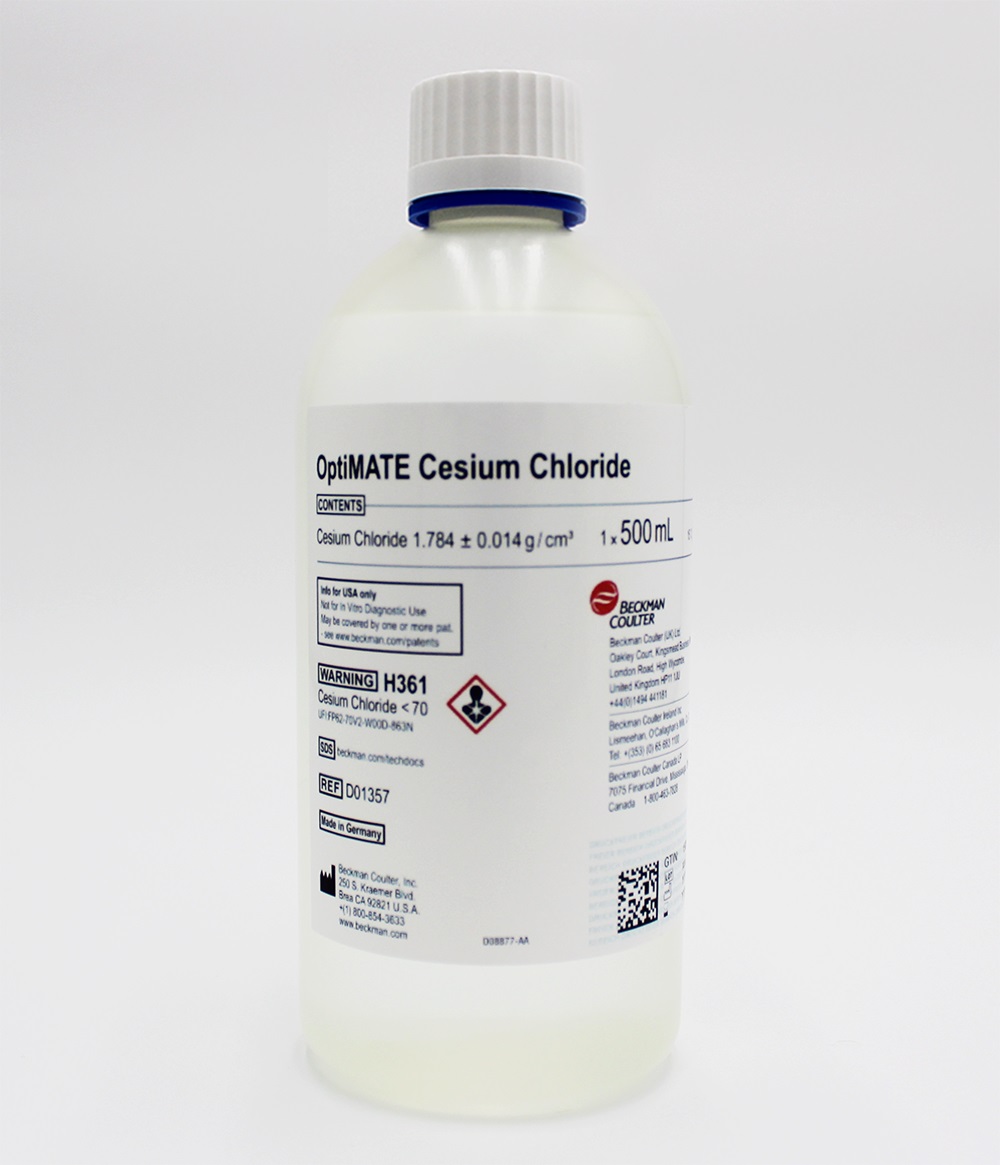
OptiMATE CsCl is a prepared solution of CsCl with a density of 1.784 ± 0.014 g/mL, reducing the manual preparation of powder dilution and allowing you to always have the same starting concentration.
Percoll Gradients—Ideal for Cell and Organelle Isolation
Published: Tháng Mười 22, 2026
Key Takeaways
- Designed for density-based separation of cells and organelles.
- Supports high cell viability during sample processing.
- Enables rapid gradient formation and efficient separations.
- Commonly used for mitochondrial, chloroplast, and stem cell workflows.
- Generally not preferred for viral purification or characterization applications.
What Is a Percoll Gradient?
A Percoll gradient is a colloidal silica-based density gradient used to separate biological particles according to their density. It is widely used for cell and organelle isolation because it supports rapid separations while helping preserve cell viability and organelle functionality throughout the workflow.
When Should You Use a Percoll Gradient?
Percoll gradients are particularly useful when isolating cells or organelles from complex biological samples. Their broad density range, rapid gradient formation, and ability to maintain biological function make them well suited for a variety of cell separation and enrichment workflows.
Typical Applications:
-
Mitochondrial Isolation
Separate intact mitochondria for downstream biochemical and functional studies.
-
Chloroplast Isolation
Enrich chloroplast fractions from plant tissues for cellular and physiological analysis.
-
Stem Cell Enrichment
Recover stem cell populations based on density differences within heterogeneous samples.
-
Sperm Preparation
Support density-based sperm selection and preparation workflows.
-
Cell Subpopulation Isolation
Separate and enrich specific cell populations from mixed biological samples.
Example Application:
Percoll gradients are frequently used to isolate intact mitochondria from complex cellular lysates. By separating organelles according to density, researchers can recover enriched mitochondrial fractions while preserving functionality for downstream analysis.
Advantages and Limitations of Percoll Gradients
Percoll offers several advantages for cell and organelle isolation workflows, particularly when preserving viability and biological activity is important. However, researchers should also consider workflow-specific limitations before selecting a gradient medium.
Advantages
- Rapid gradient formation
- Excellent cell viability
- Broad density range
- Effective organelle separations
Limitations
- Less commonly used for viral applications
- Additional cleanup steps may be required
- Protocol optimization may be necessary
When Is Percoll Not the Best Choice?
Although Percoll is highly effective for cell and organelle separations, other density gradient media may be better suited for applications requiring viral purification, viral vector characterization, nucleic acid isolation, or high-resolution viral particle separation.
Consider Alternative Media When...
- Purifying AAVs
- Characterizing viral vectors
- Purifying DNA
- Performing high-resolution viral separations
Explore Density Gradient Media
OptiMATE Gradient Reagents
OptiMATE Gradient Reagents are designed to simplify density gradient preparation workflows by providing ready-to-use, cGMP-supporting formulations for common gradient applications. For laboratories performing routine density gradient centrifugation, standardized reagents can help improve consistency while reducing preparation time.
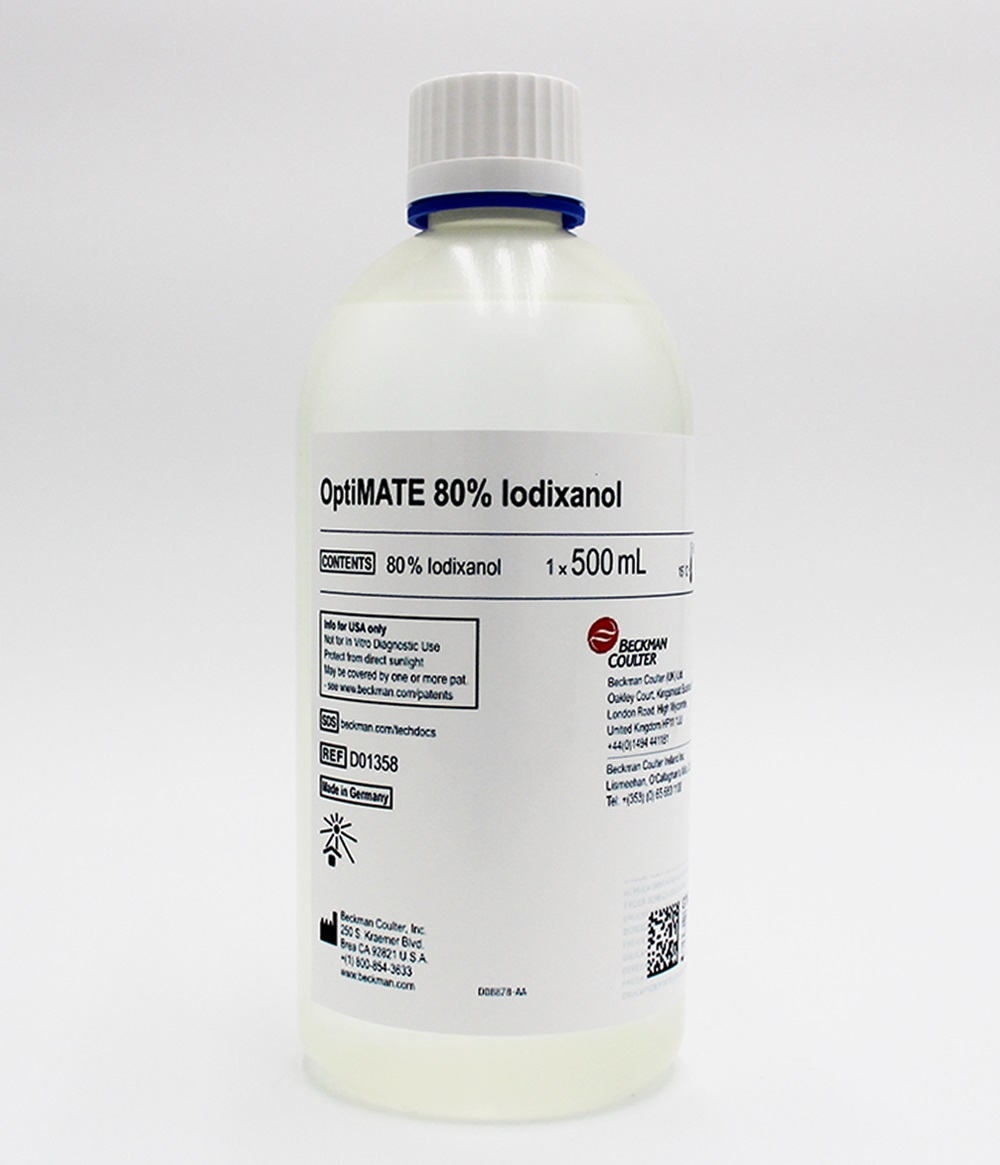
OptiMATE iodixanol is the highest on-market concentration at 80% w/v, enabling you to increase your sample per tube and decrease your bottle-related waste.
Related Resources
FAQ about Percoll Gradients
What is a Percoll gradient?
A Percoll gradient is a colloidal silica-based density gradient used to separate cells and subcellular components. It supports rapid density-based separation across a broad density range and is often selected when maintaining cell viability or organelle functionality is important.
What are Percoll gradients used for?
Percoll gradients are used for applications including mitochondrial isolation, chloroplast isolation, stem cell enrichment, sperm preparation, and cell subpopulation isolation. They are particularly useful when rapid processing and preservation of biological function are priorities.
Why is Percoll used for mitochondrial isolation?
Percoll can separate intact mitochondria from other cellular components according to density. Its compatibility with organelle separation workflows helps researchers recover enriched mitochondrial fractions while preserving functionality for downstream analysis.
When should I choose Percoll instead of Ficoll?
Choose Percoll for broader cell and organelle isolation applications, especially when mitochondrial, chloroplast, or other subcellular fractions are the target. Choose Ficoll when the primary objective is isolating PBMCs or lymphocytes from blood-derived samples.

