
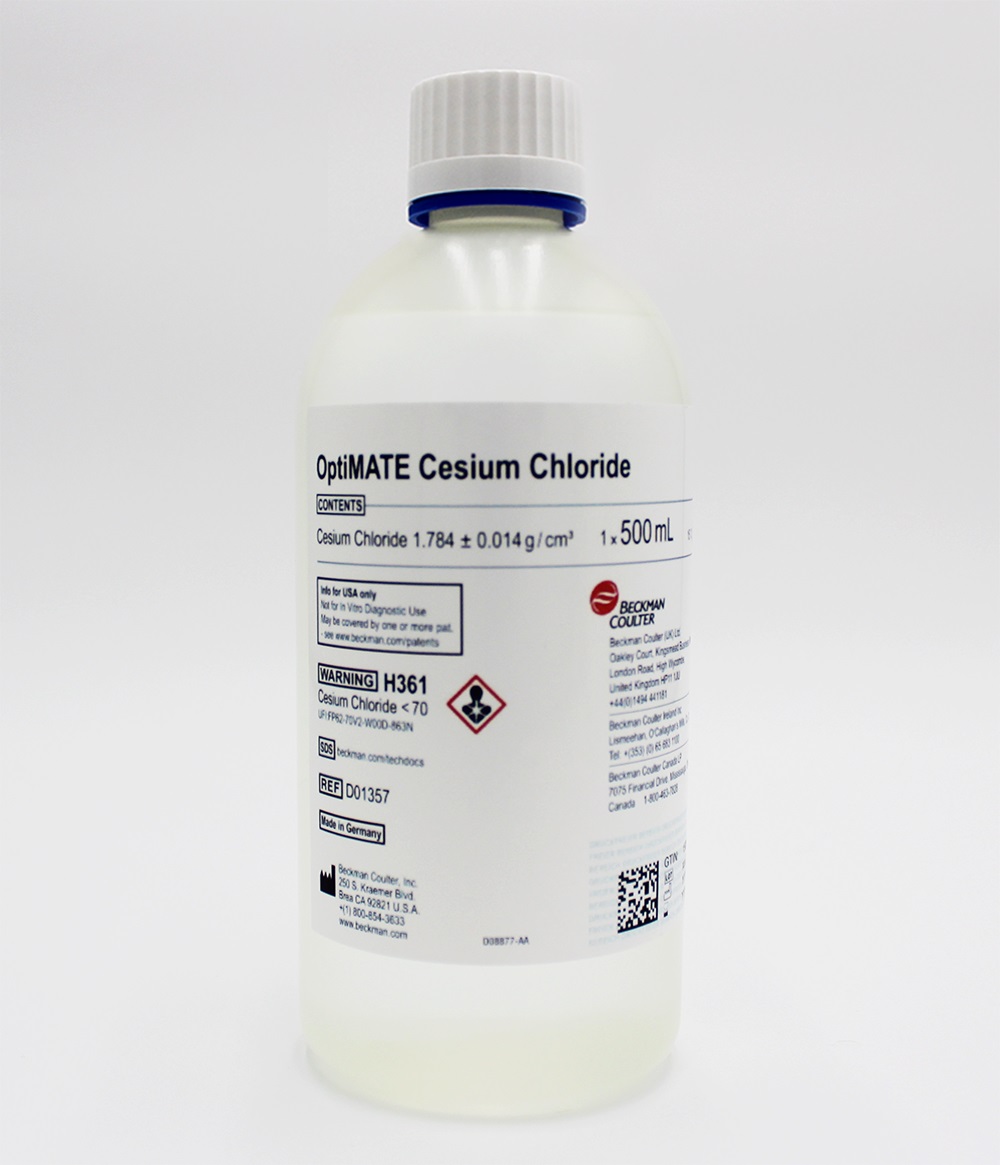
OptiMATE CsCl is a prepared solution of CsCl with a density of 1.784 ± 0.014 g/mL, reducing the manual preparation of powder dilution and allowing you to always have the same starting concentration.
Density Gradient Media and Materials: How to Choose the Right Gradient Medium
Published: Tháng Mười 22, 2026
Key Takeaways
- Density gradient centrifugation separates particles by sedimentation rate or buoyant density, enabling high-resolution isolation of proteins, nucleic acids, viral vectors, organelles, and nanoparticles.
- Selecting the right density gradient medium affects separation resolution, sample integrity, recovery efficiency, and overall workflow duration.
- Sucrose, iodixanol, cesium chloride (CsCl), Percoll, and Ficoll-Paque are chosen based on sample type, density requirements, and application-specific separation goals.
- Reproducible gradients depend on standardized reagents, consistent preparation methods, and controlled fraction recovery; OptiMATE Gradient Reagents can support workflow consistency.
- Gradient performance is influenced by more than the medium alone; tube selection, rotor configuration, and ultracentrifuge setup affect separation outcomes and reproducibility.
What are Density Gradients?
Density gradient centrifugation is a high-resolution separation technique that uses a gradient medium and centrifugal force to separate particles based on physical properties such as size, mass, and density. It is commonly used to isolate, purify, or characterize biological samples—including proteins, organelles, nucleic acids, viral vectors, extracellular vesicles, and nanoparticles—when more precise separation is needed than simple pelleting can provide. Two primary approaches are used: rate zonal centrifugation, which separates particles by how quickly they sediment through the gradient, and isopycnic centrifugation, which separates particles by buoyant density as they migrate to the point in the gradient where their density matches the surrounding medium.
Choosing the Right Density Gradient Material for Your Application
Selecting the right density gradient material is just as important as selecting the right centrifugation method. The gradient medium determines the density range available for separation, influences sample integrity, affects recovery efficiency, and can significantly impact workflow duration.
Comparison Guide: Which Density Gradient Material Should You Choose?
| Application | Recommended Material | Why |
|---|---|---|
| Protein fractionation | Sucrose | Gentle, well established, excellent for rate-zonal separations |
| Ribosome analysis | Sucrose | High-resolution fractionation by sedimentation rate |
| AAV purification | Iodixanol | Preserves biological activity while providing strong resolution |
| AAV characterization | Iodixanol or cesium chloride | Selection depends on resolution and recovery requirements |
| Full vs. empty capsid separation | Cesium chloride or Iodixanol |
Effective density-based separation |
| DNA purification | Cesium chloride | Highest density resolution |
| Extracellular vesicle isolation |
Iodixanol | Improved purity and biological compatibility |
| PBMC isolation |
Ficoll-Paque | Designed specifically for cell separations |
| Organelle purification |
Percoll or Sucrose | Depends on organelle type and workflow goals |
| Cell subpopulation isolation |
Percoll | Supports viability and density-based enrichment |
Standardizing Reagents for More Consistent Gradients
Reproducible gradients begin with reproducible reagents. Variability in reagent preparation can affect density profiles and ultimately influence particle migration and fraction recovery.
Ready-to-use density gradient media can help reduce the number of preparation steps and minimize opportunities for operator-introduced variability.
OptiMATE Gradient Reagents are designed to simplify density gradient preparation workflows by providing ready-to-use, cGMP-supporting formulations for common gradient applications. For laboratories performing routine density gradient centrifugation, standardized reagents can help improve consistency while reducing preparation time.
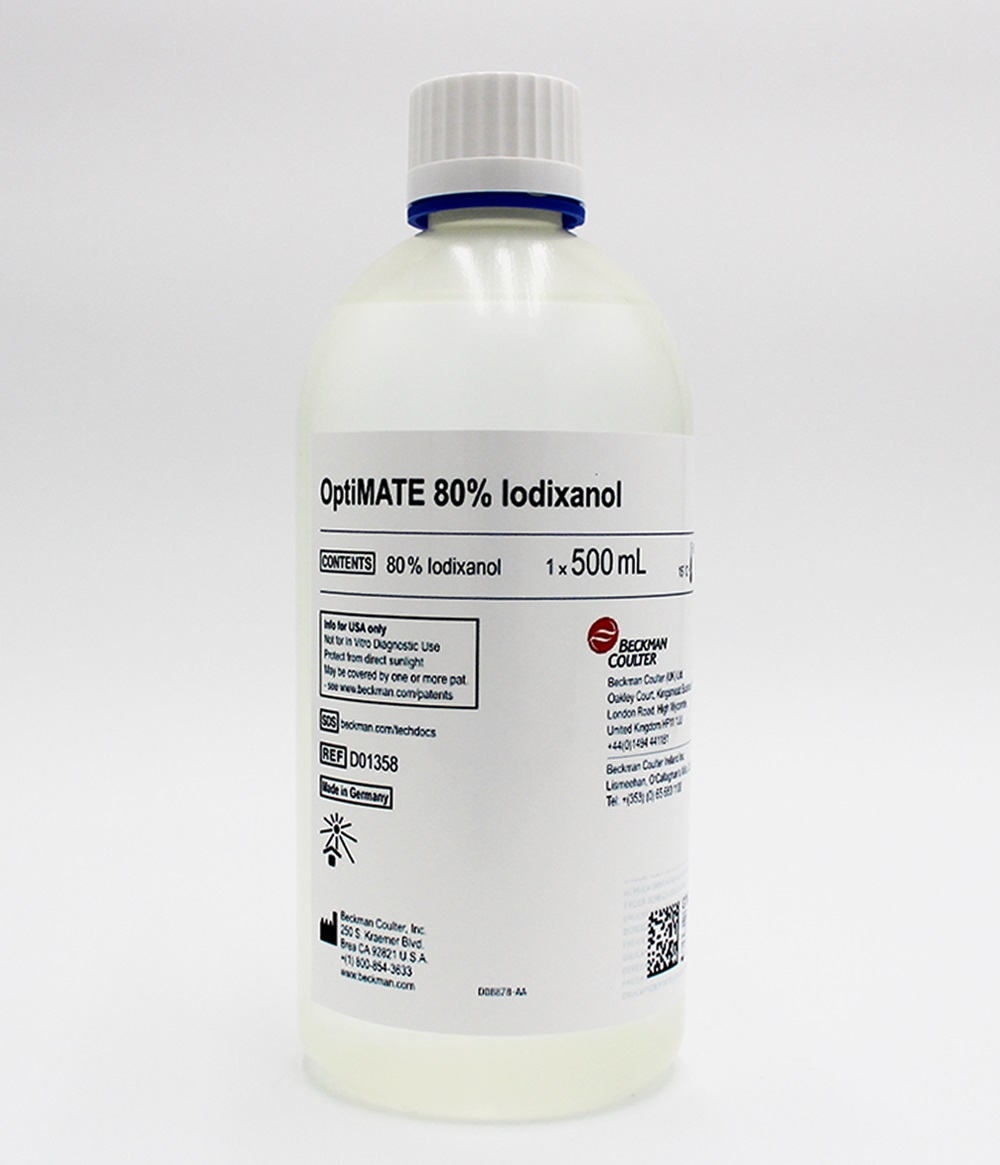
OptiMATE iodixanol is the highest on-market concentration at 80% w/v, enabling you to increase your sample per tube and decrease your bottle-related waste.
Don't Overlook Tubes, Rotors, and Ultracentrifuge Configuration
Gradient performance is influenced not only by the density medium itself, but also by the hardware used throughout the workflow. Tube selection affects visibility and sample handling, while rotor design directly influences sedimentation path length, centrifugal force, and run time.
For density gradient ultracentrifugation workflows, researchers should consider:
- Gradient preparation
- Tube compatibility
- Band visualization needs
- Rotor configuration
- Sample throughput requirements
- Target centrifugal force
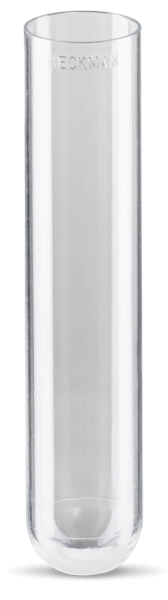
OptiSeal tubes, Quick-Seal tubes, Ultra-Clear tubes, compatible rotor systems, and the Optima X-Series Ultracentrifuges can help support reproducible density gradient workflows while providing flexibility across a broad range of applications, including AAV purification, protein fractionation, extracellular vesicle isolation, and viral vector characterization.

The OptiMATE Gradient Maker and OptiXTRACT Sample Recovery Aid can help improve the overall workflow from automated gradient preparation to controlled sample band extraction.


Expert Tip
Many density gradient workflows focus heavily on optimizing centrifugation parameters, yet some of the largest improvements in reproducibility come from standardizing gradient preparation, tube handling, and fraction recovery. Controlling these workflow variables can often reduce experimental variability more effectively than making additional adjustments to centrifugation conditions alone.
Related Resources
FAQ about Density Gradient Media and Materials
What materials are used in density gradient centrifugation?
Common materials include sucrose, iodixanol, cesium chloride (CsCl), Ficoll, and Percoll.
Each material has specific advantages: sucrose for gentle separations, iodixanol for biological compatibility, and CsCl for high-resolution density separation of nucleic acids.
How do I choose the right density gradient medium?
Choose a medium by considering the target particle, required density range, separation mechanism, sample sensitivity, recovery needs, and acceptable processing time. The medium can affect separation resolution, sample integrity, fraction recovery, osmotic conditions, and overall workflow duration.
What is the difference between sucrose, iodixanol, Ficoll, Percoll, and CsCl?
Sucrose is well established for proteins, ribosomes, and general fractionation. Iodixanol supports viral vector, extracellular vesicle, and sensitive-particle workflows. Ficoll is commonly used for PBMC isolation, while Percoll supports cell and organelle separation. CsCl is selected when high density resolution is required for nucleic acids or viral particles.
Which density gradient medium provides the highest resolution?
CsCl is the strongest choice in this ecosystem when maximum density resolution is required. It is particularly suited to DNA purification and viral particle characterization, while iodixanol may be preferred when biological compatibility and sample integrity are greater priorities.

