
Echo Acoustic Liquid Handlers: Proven Performance for Precise, Scalable Liquid Handling
Published: Tháng Mười 27, 2026
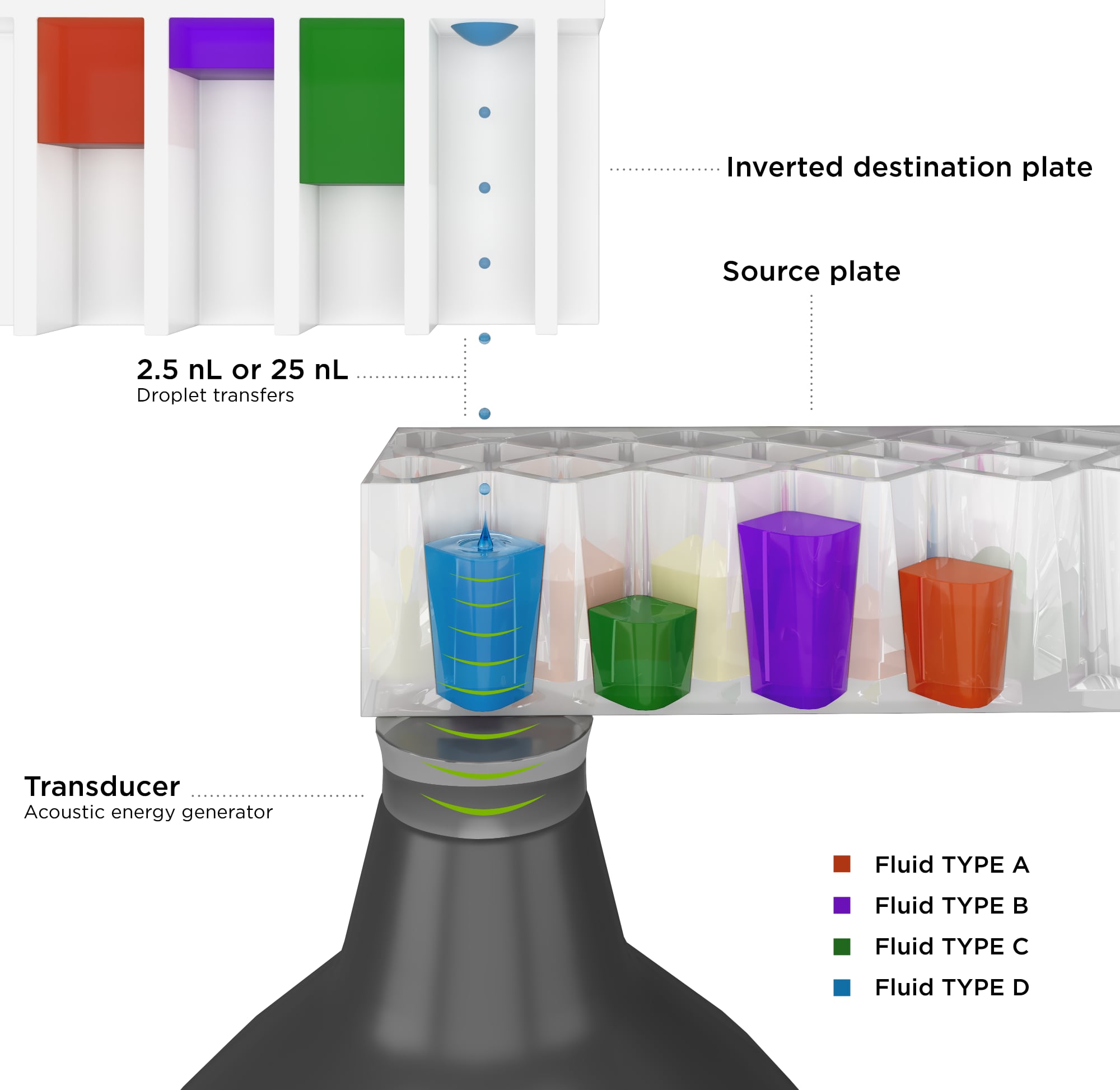
Proven liquid handling performance helps laboratories generate confident results, reduce variability, and scale demanding workflows. Echo acoustic liquid handlers use contact-free acoustic droplet ejection to transfer nanoliter-scale volumes with precision and reproducibility across a broad range of applications, including drug discovery, sample management, synthetic biology, genomics, proteomics, and functional screening.
Backed by more than 20 years of commercial use and a substantial body of published literature, Echo systems support high-quality data, assay miniaturization, reproducible workflows, and efficient laboratory operations.
High data precision across diverse sample types
High data precision depends on consistent and reliable liquid transfer. This is especially important when workflows include diverse or complex sample types, where transfer inconsistency can introduce uncertainty into downstream results.
Since the commercial launch of the Echo instrument, more than 1100 publications in sample management and screening have been published. These studies include applications involving DMSO-based small molecules, aqueous biological reagents, peptides, siRNA, drug conjugates, and nanoscale synthesis workflows.
- Faster progression from screen to dose response. In comparison of two antibacterial high-throughput screening programs separated by a three-year interval, the earlier campaign yielded 50,000 hits, but dose-response efforts took over a year from the primary screen because cherry-picking capabilities were limited. In the later program, the inclusion of the Echo acoustic liquid handler shortened dose-response efforts to one month using high-throughput cherry picking.4
- Strong between-plate reproducibility. In a study using dose-response curves in a 10-point dilution series, the coefficient of variation across series was reported as less than 15%.4 It should be noted that assay repeatability depends on multiple experimental and workflow factors.
- Accurate peptide dilution and preserved potency. Naylor et al. showed that acoustic droplet ejection with the Echo 550 liquid handler enabled precise peptide transfer, accurate dilution, and prevention of activity loss due to adsorption to plasticware.2
- Accurate low-volume siRNA dispensing without step-down dilution. Nibane et al. reported that the Echo 555 liquid handler enabled accurate low-volume siRNA dispensing while eliminating carryover and cross-contamination through tipless operation. The optimized siRNA screening platform achieved assay performance comparable to or exceeding standard genome-wide siRNA screens.3
- Performance across additional modalities. Published examples also demonstrate the use of Echo acoustic liquid handling with GLP-1 peptide analogues and THIOMAB drug conjugates, including peptide dilution and five-point dose-response workflows used for quantitative LC-MS/MS analysis.2,5
Together, these published examples show how Echo acoustic liquid handlers can support reproducible data generation across different workflow types and sample modalities.
Miniaturization that supports efficiency and cost savings
Assay miniaturization creates value when low-volume transfers remain accurate, reproducible, and practical across real research conditions. Echo acoustic liquid handlers support nanoliter-scale dispensing across a wide range of modalities, including workflows involving viscous samples, high-protein concentrations, and glycerol-containing solutions.
By reducing reagent consumption and enabling smaller reaction volumes, Echo systems can help lower study costs while maintaining reliable assay performance. Published examples include cell-based plasma assays using the Echo 550 liquid handler, where acoustic dispensing reduced sample volume requirements, increased data yield, and supported workflows from high-throughput screening to in vivo exposure analysis.2
In nanoscale synthesis, Gao et al. described advantages including improved economics, automated synthesis speed, and increased safety in a 1536-well synthesis workflow.1
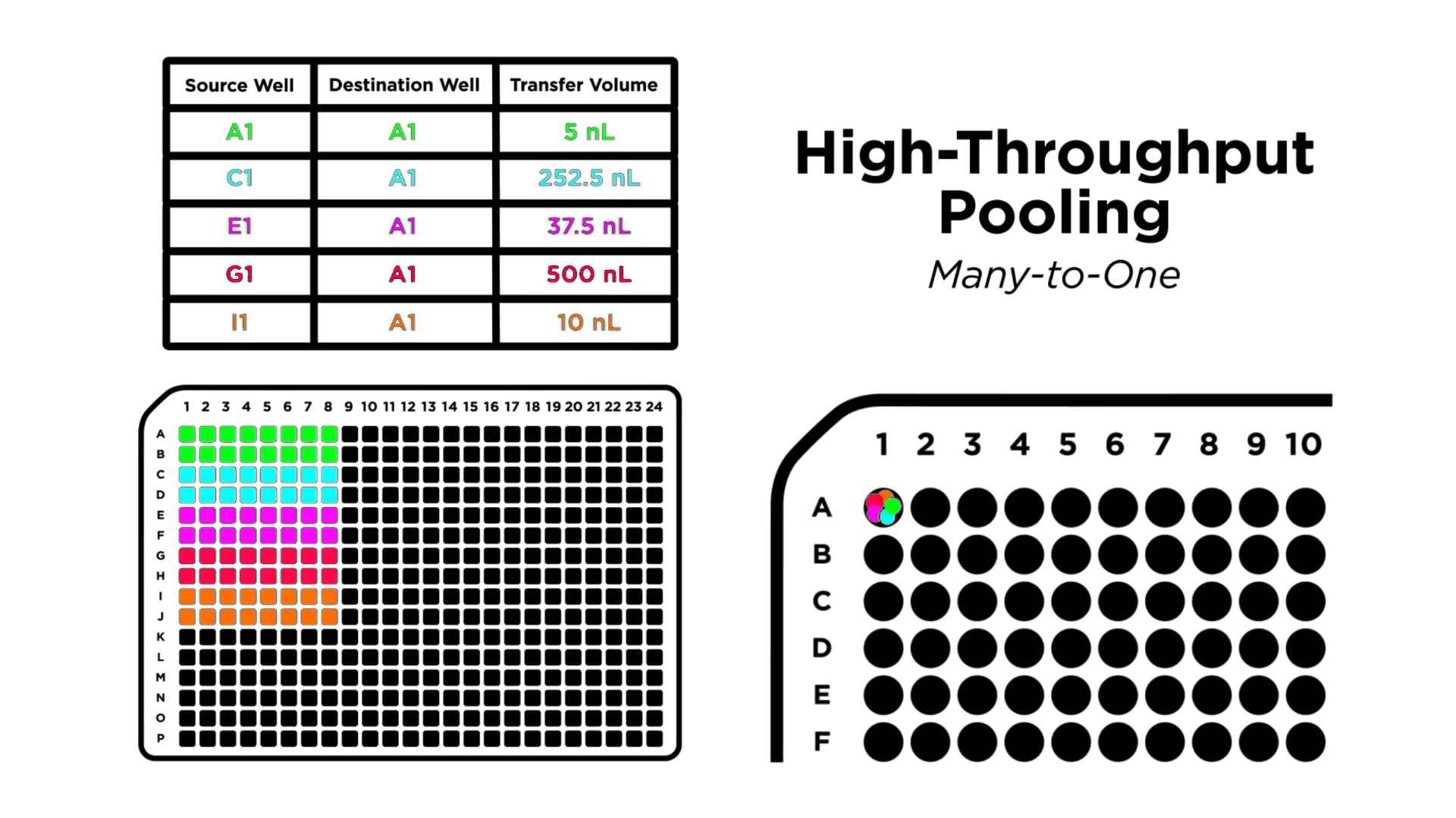
For laboratories looking to conserve precious reagents, reduce waste, or increase throughput, acoustic liquid handling provides a pathway to miniaturized workflows without sacrificing reproducibility.
Consistent performance across workflows, users, and sites
Consistency is not only about precision in a single run. It is also about whether a workflow performs reliably across users, teams, and environments.
Automation helps standardize liquid handling workflows across users, teams, and environments. Once configured, automated processes can run with reduced manual intervention while maintaining consistent dispensing performance.
For laboratories operating across multiple users or sites, standardized acoustic transfer can help reduce operator-dependent variability and improve reproducibility at the process level.
Legacy and scientific credibility
Echo acoustic liquid handling is well established in modern drug discovery and life science research. Its credibility is supported by broad industry adoption, peer-reviewed publications, and continued use in high-throughput and high-value workflows.
- Long-standing field recognition. The February 2016 special issue, “Advancing Scientific Innovation with Acoustic Droplet Ejection,” highlights ADE’s established scientific and industry relevance.6
- Broad adoption. Echo instruments have been adopted by most major pharmaceutical companies and many biotech companies engaged in early drug discovery.
- Protected core technology. Echo systems use proprietary, patent-protected algorithms designed to support accuracy, consistency, and reliability.
For organizations evaluating a liquid handling platform, this combination of peer-reviewed evidence, field recognition, and broad adoption supports confidence in Echo technology as an established platform for scalable acoustic liquid handling.
Uptime and productivity
Reliable performance helps laboratories keep critical workflows moving. Echo systems are designed to support instrument availability, stable operation, and productive run time for high-throughput environments.
By reducing interruptions and supporting consistent operation, Echo acoustic liquid handlers help laboratories maintain schedules, meet throughput goals, and improve overall operational efficiency.
Efficiency in workflow operation and implementation
Echo acoustic liquid handlers help accelerate workflows through rapid plate-to-plate transfer, automated well-by-well optimization, and worklist-driven cherry picking. Fast acoustic dispensing and efficient plate processing can reduce run times, while intelligent optimization minimizes manual tuning and setup effort. The ability to quickly repeat transfer putative actives using CSV- or XML-driven worklists also supports reproducibility testing, orthogonal screening, and potency or affinity characterization through direct dilution efforts.
FAQs
How do Echo acoustic liquid handlers improve data precision?
Echo acoustic liquid handlers improve data precision by using contact-free liquid transfer to reduce variability, carryover, and cross-contamination. Dynamic Fluid Analysis enables real-time adjustment to well-specific fluid conditions, supporting reproducible low-volume dispensing across diverse and complex sample types.
What makes acoustic liquid handling more reproducible than traditional methods for non-contact transfers?
Acoustic liquid handling transfers liquids without physical contact, minimizing mechanical variability and helping maintain consistent dispensing performance across different sample compositions and matrices.
How accurate are Echo liquid handlers for low-volume dispensing?
Echo liquid handlers support accurate low-volume dispensing, including nanoliter-scale transfer. Published examples show consistent precision across multiple sample types and workflow formats.
Can Echo liquid handlers handle complex biological samples?
Yes. Echo liquid handlers support reliable performance across complex biological samples, including plasma, serum, and high-protein matrices. Some specialized or corner-case sample types may require workflow evaluation; contact Beckman Coulter Life Sciences to discuss specific requirements.
How do Echo systems reduce the risk of cross-contamination?
Echo systems reduce cross-contamination risk by using a tipless, contact-free transfer mechanism with power adjusted on a per-source, per-well sample basis. Because there are no pipette tips contacting the liquid, the approach helps minimize carryover between transfers and supports more reliable results.
How does acoustic liquid handling support assay miniaturization?
Acoustic liquid handling supports assay miniaturization by enabling precise nanoliter-scale dispensing. This allows smaller reaction volumes while maintaining reproducibility and data quality.
What cost savings can Echo liquid handlers provide?
Echo liquid handlers can reduce study costs by minimizing consumables and reagent use, reducing hazardous waste generation, and enabling assay miniaturization.
Are Echo liquid handlers widely used in the pharmaceutical industry?
Echo liquid handlers are widely adopted in the pharmaceutical industry and by many biotech companies engaged in early drug discovery, highlighting scalability and reproducibility as key reasons for adoption.
How do Echo liquid handlers improve laboratory productivity?
Echo liquid handlers are described as improving productivity by automating liquid transfer with consistent performance. Reduced manual intervention and fewer interruptions help labs maintain throughput and meet timelines.
Why is contact-free liquid handling important for data quality?
Contact-free liquid handling is presented as important for data quality because it removes variability associated with pipette tips and manual processes, helping support more consistent sample preparation and more reliable downstream results.
References
- Gao L et al. ‘Chemistry at the speed of sound’: automated 1536-well nanoscale synthesis of 16 scaffolds in parallel. Green Chem. 2023;25(4):1380–1394. doi: 10.1039/d2gc04312b
- Naylor J et al. Acoustic Dispensing Preserves the Potency of Therapeutic Peptides throughout the Entire Drug Discovery Workflow. Journal of Laboratory Automation. 2016;21(1):90–96. DOI: 10.1177/2211068215587915
- Nibane NM et al. Acoustic Droplet Ejection Technology and Its Application in High-Throughput RNA Interference Screening. J Lab Autom. 2016 February;21(1):198–203. doi:10.1177/2211068215620346.
- Schopfer U, Engeloch C, Höhn F, Mees H, Leeds J, Glickman F, Scheel G, Ferrand S, Fekkes P, Pfeifer M. Hypothesis-driven screening. Methods Mol Biol. 2009;575:297–316. doi: 10.1007/978-1-60761-274-2_13. PMID: 19727621.
- Hernandez-Barry H et al. Mechanistic Characterization of the Potency of THIOMAB Antibody-Drug Conjugates Targeting Staphylococcus aureus and ETbR-Expressing Tumor Cells Using Quantitative LC-MS/MS Analysis of Intracellular Drug Accumulation. Bioconjug Chem. 2025 Apr 16;36(4):652-661. DOI: 10.1021/acs.bioconjchem.4c00533, PMID: 40179311
- Olechno J, Green C, Rasmussen L. Why a Special Issue on Acoustic Liquid Handling? Journal of Laboratory Automation. 2016;21(1):1–3. doi:10.1177/2211068215619712.

Talk to an Expert
Echo Acoustic Liquid Handlers
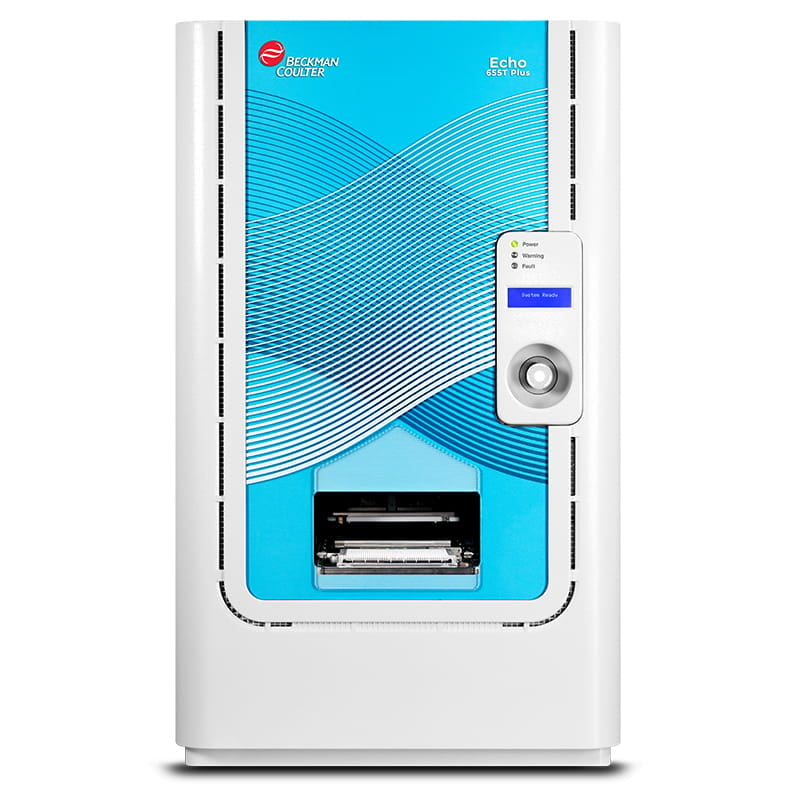
Echo 650 Plus Series Acoustic Liquid Handlers
High‑Throughput, Non‑Contact, Accurate, and Precise Liquid Dispensing with Volumes as Low as 2.5 nL

Echo Plate Reformat Software
Echo Plate Reformat software offers a variety of liquid transfer functions, including assay plate replication, library compression, & customization.

Echo Cherry Pick Software
Echo Cherry Pick software enables transfers of any volume of liquid from any source well into any destination well.

Echo Dose-Response Software
Echo Dose-Response software provides a simple step-wise process for designing assay plate layout and creating dose-response curves.


